
The Flagship, Rewritten
From prestigious addresses to purposeful spaces: unique concepts are now how brands show what they stand for & drive authenticity, not just transactions. But, how do you translate the ROI externally?

Flagships used to be the “F-word” in boardrooms.
They were expensive to build, impossible to measure, and often defended with vague references to “brand visibility.” Even New York’s 5th Avenue, which was once the ultimate retail address, started to feel like a monument to a different era, more billboard than business case.
The old flagship was built for visibility, a stage meant to be seen. The new flagship is built for resonance, a place where people connect rather than pass by.
That shift is reshaping what retail space is for. People no longer want ‘just’ transactions; they want authentic interactions. They want to feel a connection to something real.
Earlier this week, I was in Mexico City and walked into the Golden Goose HAUS in the Roma Norte neighborhood, and that shift was unmistakable.
At first glance, it’s everything you’d expect from the Italian label: distressed leather, signature stars, confident ease.
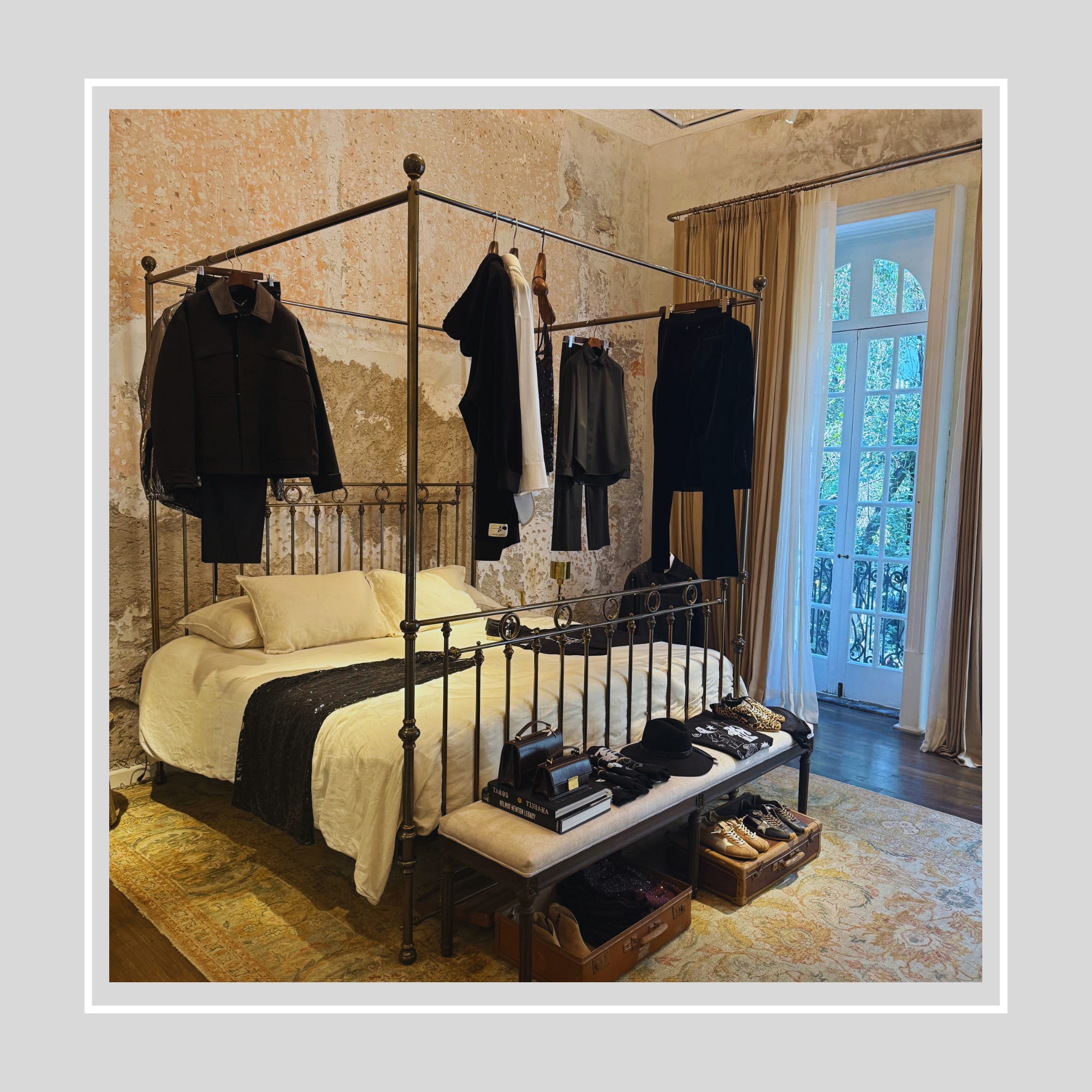
Walk further into this concept store, and you’ll quickly realize it’s not just retail theater. It’s a space that feels personal and intimate, more like someone’s actual home than a store — like the lived-in master bedroom shot above, curated with ready-to-wear and handbag pieces.
Golden Goose describes HAUS as a space that “welcomes a community of dreamers,” with the idea being not to only showcase product, but to create belonging within its community. Each room feels lived in, filled with warmth and small imperfections that make it human. The brand has created an environment where its values of family, love, and togetherness exist in physical form.
It is not a store built to sell. It is a home built to authentically engage with consumers.
The Flagship, Rewritten
Concept stores like this are the evolution of the flagship.
Where traditional flagships once stood as symbols of scale and aspiration, their modern counterparts serve as symbols of identity.
They are smaller, more intentional, and rooted in place. They act as community spaces rather than retail showrooms, trading volume for depth.
The old flagship was built for visibility, becoming a billboard in physical form. The new flagship is built for resonance, a place where people connect rather than pass by.
For decades, a prime 5th Avenue address was the ultimate measure of brand strength. Today, location has been replaced by emotion. The most valuable retail spaces aren’t the most visible, they’re the most authentic.
So What Does This Look Like in Practice? Enter Coach.
A brand that’s doing this especially well? Coach. (Though I acknowledge I might have some bias after spending the majority of my career there.)
Coach has been building the same idea of authentic connection, including through its Coach Play and Coach Café experiences around the world.
At Coach Café in Singapore, visitors can sit for coffee under the brand’s signature horse and carriage, surrounded by details that merge New York nostalgia with local charm. The experience invites guests to spend time with the brand rather than simply shop it.
The Coach Play series takes that even further, blending the house’s New York heritage with each city’s unique personality. The brand describes it as engaging all five senses to create moments rooted in discovery and self-expression.
This approach speaks to how customer expectations have evolved. People no longer want to only transact; they want authentic interactions. They want to feel a connection to something real.
Coach and Golden Goose are chasing the same outcome: a physical representation of emotional truth.
Why It Matters
Concept stores are expensive, and for investors focused on measurable returns, that can be a hard line item to justify. The question often sounds something like: Why are we spending this much on what looks like a vanity project? How do we know it’s working?
Those are fair questions. The challenge is that the traditional metrics, such as sales per square foot, traffic counts, conversion, don’t tell the full story anymore.
For brands, the value of these spaces lies in how they shape perception, deepen connection, and signal long-term direction. But when that story doesn’t translate clearly to investors, the gap between intention and interpretation grows wider.
Bridging that conversation is what matters most. The brands that can articulate not just what they’re building, but why it builds value, are the ones that earn both consumer loyalty and investor confidence.
Flagships didn’t disappear; they evolved. They stopped shouting scale and started speaking meaning. They found new life as homes, cafés, and cultural spaces that connect people to purpose.
And in a market where connection has become currency, that translation might be the most important return of all.
My retail advisory firm helps lifestyle and consumer brands bridge the gap: translating brand storytelling into investor confidence. Through the Investor Lens Diagnostic, a focused five-day sprint, we pressure-test your narrative, align your data, and turn meaning into measurable momentum.
Interested in learning more or discussing your brand’s goals? Send me a message or schedule a 30-minute introductory session below. Let’s build your investor story.